

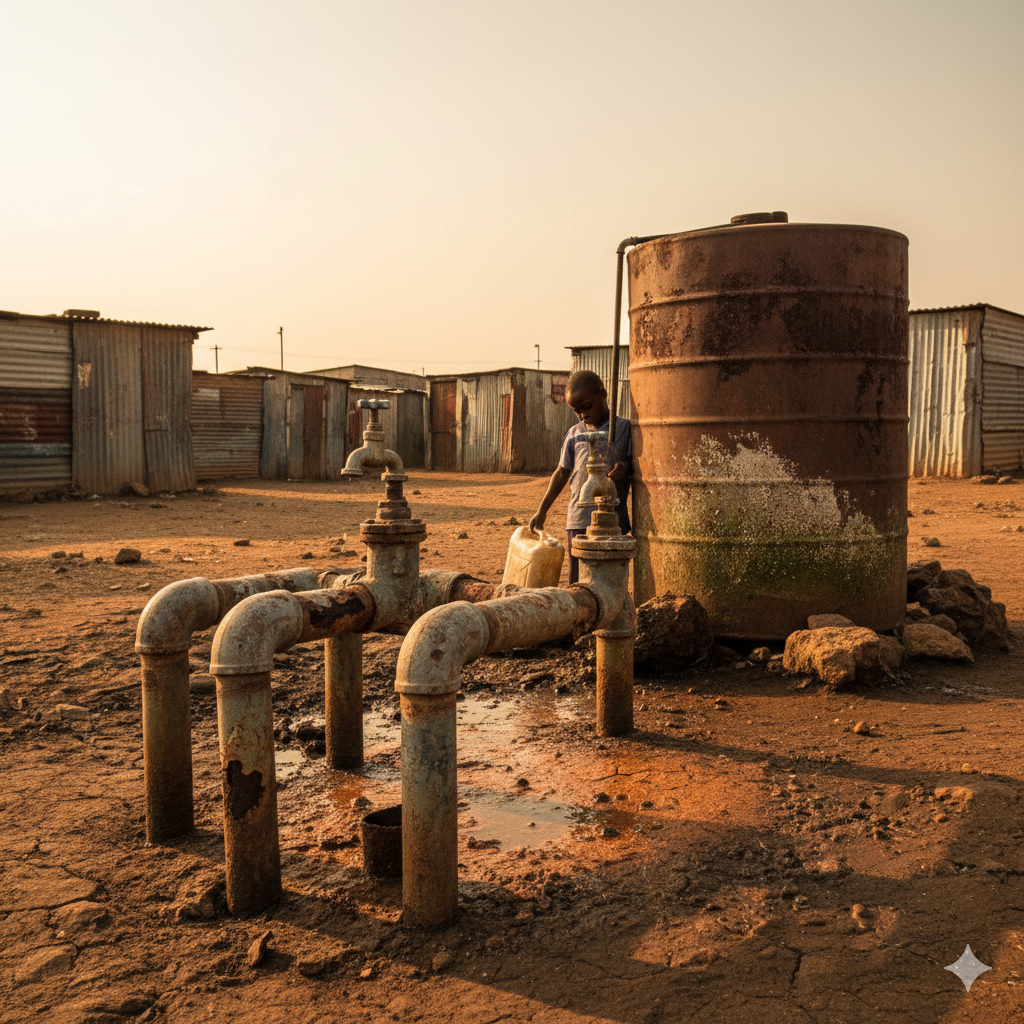
South Africa faced significant water corrosion and infrastructure challenges, primarily driven by aging systems, poor maintenance, and increased festive season demand.
Major Infrastructure & Maintenance Events
- Lesotho Highlands Water Project (LHWP) Shutdown: A critical six-month maintenance shutdown of the LHWP tunnels began in late 2024 and continued through 2025. The primary focus was on re-applying corrosion protection to steel-lined sections that had significantly deteriorated.
- Festive Season Strain: High demand in December 2025 exacerbated existing issues with overloaded pump stations and increased risks of service failure. Reduced staffing during this period led to slower emergency responses for pump and pipe failures.
- Asset Management Warnings: In late 2025, industry experts highlighted failures in newer infrastructure, such as a 12-year-old epoxy-lined pipeline failing prematurely due to aggressive soils and poor specifications, contrasting with older, better-maintained systems.
Corrosion-Related Risks and Solutions
- Coastal Vulnerability: Engineers were urged to use specialized corrosion-resistant materials (like galvanized rebar and duplex coating systems) for any water infrastructure within 10km of the coast to combat saltwater corrosion.
- Rural Handpump Failure: A December 2025 initiative highlighted the “rapid corrosion” of handpumps as a persistent issue affecting rural water supplies, leading to high maintenance costs and unreliable service.
- Water Loss & Leaks: Corrosion and aging infrastructure contributed to massive water losses. For example, Cape Town reported a 35% water supply waste due to leaks in December 2025. Nationally, nearly 36.8% of municipal water is lost to leakage annually.
- Alternative Materials: There has been a push to replace corrosive metal pipes with High-Density Polyethylene (HDPE) or PVC, which offer superior chemical resistance and are impervious to the effects of salt.
Service Quality and Contamination
- Wastewater Failure: Reports from December 2025 indicated that 86% of sewage treatment plants were releasing polluted water into rivers, often due to corrosion and total system collapse in municipalities lacking technical skills.
- Drinking Water Safety: One in eight people using municipal tap water in 2025 was exposed to unsafe drinking water, largely due to deterioration in the value chain beyond treatment plants.